


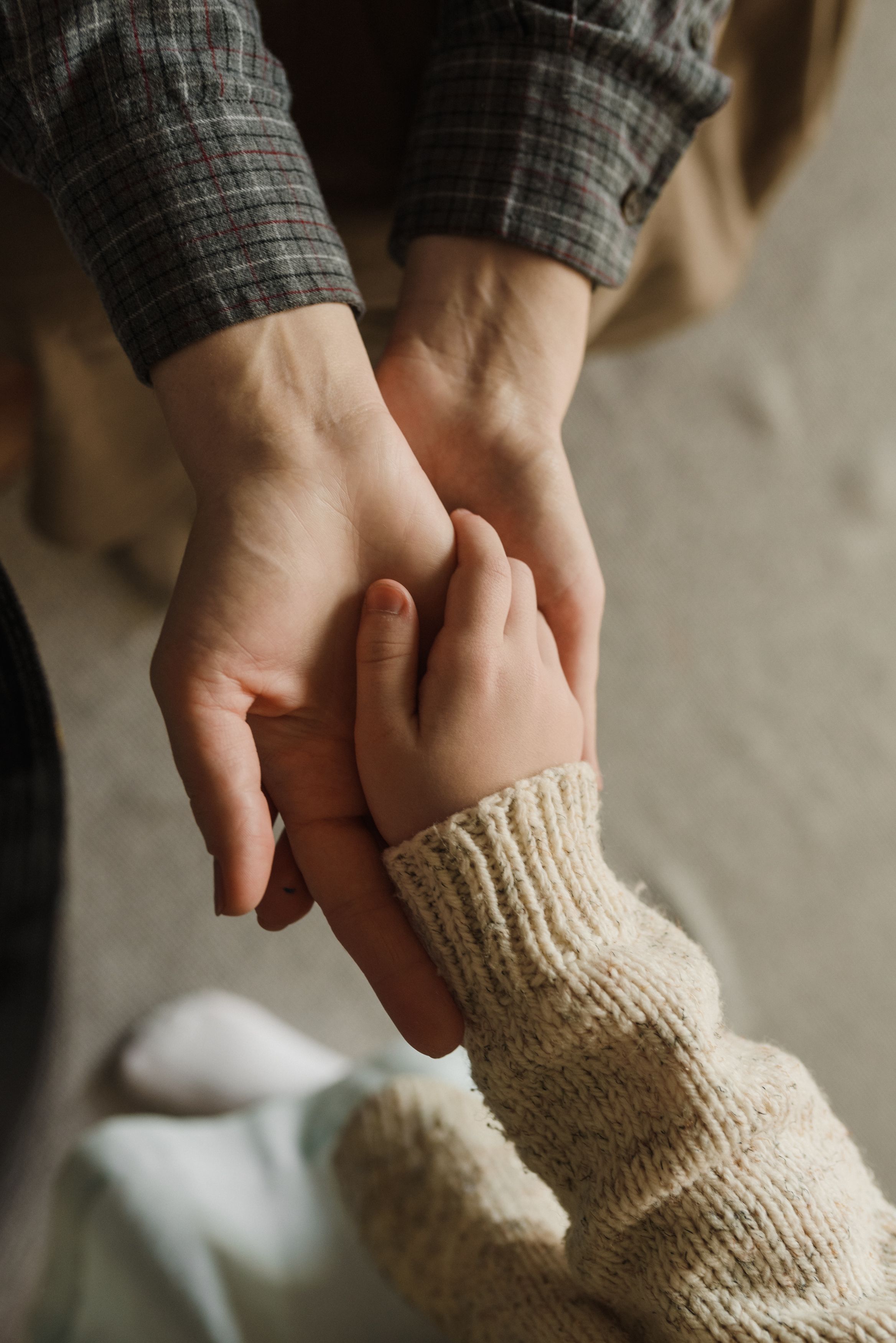
Elisa was two years old when she was diagnosed with Leber's congenital amaurosis. She grew up blind, attending public schools in New York and New Jersey before federal special education law was in place. She learned early how to advocate for herself, long before she knew how much that skill would matter.
Years later, her son Robbie was born, and she discovered he had vision problems too, from a spontaneous mutation. Elisa grieved, as any parent might. But when it came time for Robbie to start school, she was ready.
"When Robbie was ready to go to school, I was ready, and I was ready to fight for everything. And I did... I was very adamant about it."
Her persistence paid off. Robbie received private orientation and mobility services and assistive technology throughout school, starting in preschool. It was hard, emotional work, and much of it happened in meetings, evaluations, and appointments that can feel like a maze.
What a community changes
Elisa knew her own experience gave her an advantage. Most parents don't have it. For many families of blind and low-vision children, the early years mean working through the medical and educational systems, often without anyone nearby who has done it before.
So Elisa began helping other parents. Today she serves about 20 families in New Jersey, and she is part of Sidewalks, a parent support group from TAD Foundation. Sidewalks brings together families of blind and low-vision children at different ages and stages, to share what they've learned. It hosts sessions on topics like orientation and mobility, and it makes room for the honest conversations that come with each new stage, such as balancing a child's growing independence with a parent's natural worries.
For Elisa, Sidewalks is personal. She has been on both sides of the experience.
"It's so much better now that parents are connected and they have each other... I was the blind child in public school, and now I am the parent of a blind child who was in public school. And being the parent is so much harder... Being the kid, you know, kids are resilient."
The effect shows up in small moments. At a recent event, a fourth-grade girl was excited to meet other children with low vision. That day, she wasn't the only one.
Advocacy, in good company
Community doesn't replace advocacy. It supports it. A parent who knows other parents has people to call, answers to compare, and proof that the road continues. Children who meet their peers see themselves in a group instead of as the exception.
That sense of belonging carried into Robbie's story. Elisa first learned about TAD through a Facebook post, and Robbie went on to become a TAD Fellow. She has seen how the program raises expectations for blind and low-vision students. TAD pairs its Fellows with both blind and sighted mentors who help with networking and career guidance.
And she has watched what happens when young people find each other.
"These kids, Robbie's peers, the college and just out of college, they're in touch with each other all the time. They share technology tips. They talk about how to deal with a professor. Unofficially, they're in touch with each other. How do you do this on JAWS? How do you do this on Excel? What's this keyboard command for that?... It's just such a great network. And TAD is just the embodiment of that great network of kids and parents and raising expectations."
From first steps to limitless possibilities
Every family's story starts with a first step, and the first steps are often the scariest. A diagnosis, a school meeting, a room full of unfamiliar systems. What changes the journey is who is beside you. With a community, fear turns into confidence, and a family begins to see what their child could become.
If you're raising a child who is blind or has low vision, you don't have to take those first steps alone. Sidewalks connects you with families who understand, along with education and resources for each stage of the journey, so you can walk toward the possibilities ahead.
Check out the Sidewalks community!





SHARE